
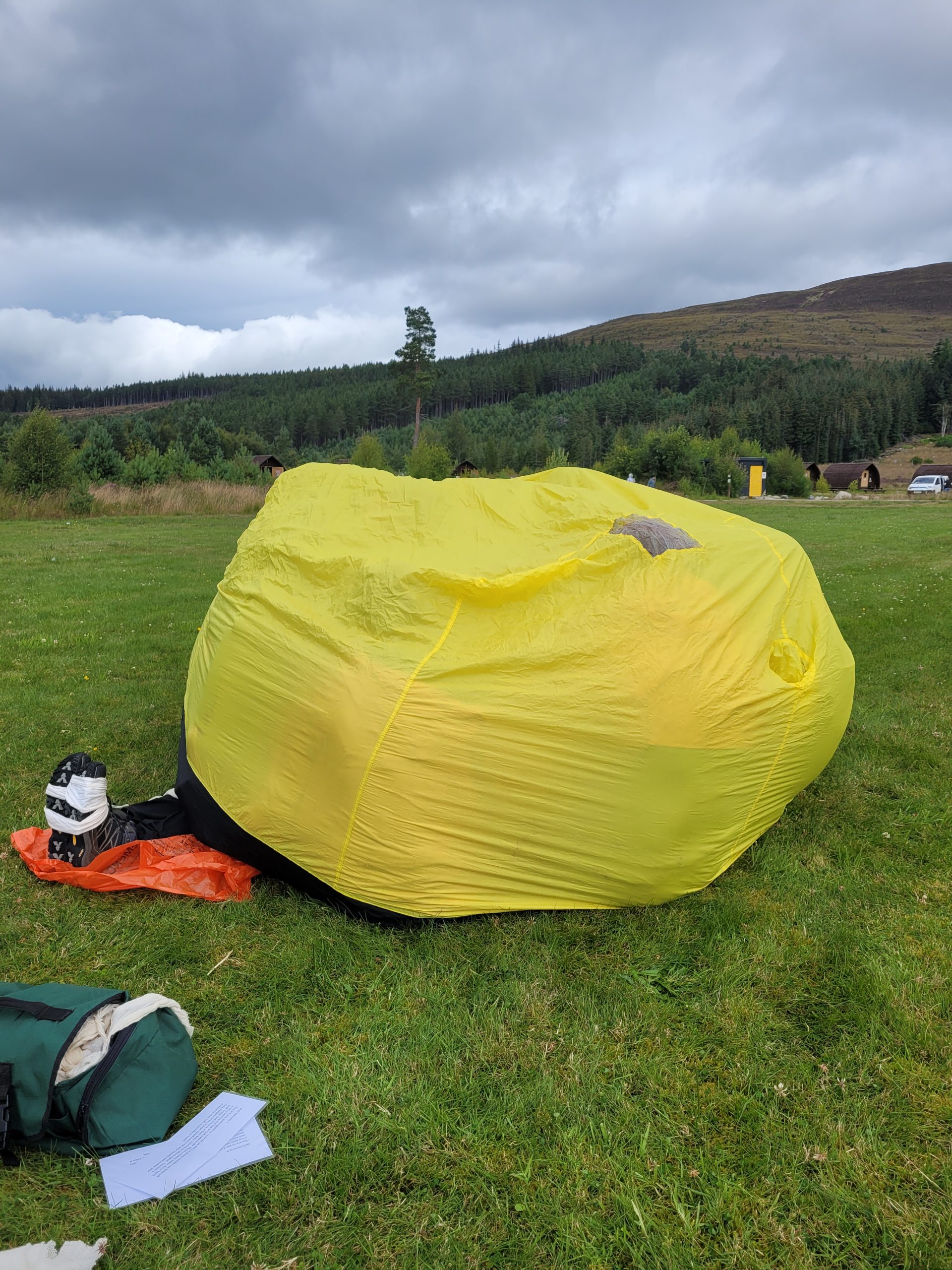
Whether you Ski tour, lead Duke of Edinburgh expeditions, Hill walks, Scout activities, forest school sessions or outdoor education programmes, there is one certainty: at some point you will encounter a casualty.
While most incidents are relatively minor, some can become serious if not recognised and managed appropriately. Good Outdoor First Aid training provides the skills and confidence to deal with emergencies when professional help may be hours away.
Why Outdoor First Aid is Different
Unlike an office or urban environment, outdoor leaders often face unique challenges:
- Difficult terrain
- Poor weather
- Limited communication
- Extended waiting times for emergency services
- Managing a group whilst caring for a casualty
These factors mean that outdoor first aiders often need to provide care for much longer than would normally be expected in a workplace setting. In Scotland Expect to wait for hours for assistance. Mountain Rescue is a voluntary service in the UK. Volunteers have to be called from their work, their families, their beds. Remember: Helicopters don’t fly in bad weather.
if calling for help dial 999 or 112 and ask for the police and then mountain rescue, If you have little signal, you can send a text which my get through via the 112 system. You have to register your phone in advance with 112. Do that by sending the one word REGISTER in advance to 112. Do that now.
The international distress signal is 6 blasts of a whistle with a minute between. The response is 3 blasts of a whistle at night you can use a torch in place of the whistle.
Scenario 1: Hypothermia During an Expedition
A participant begins to walk more slowly, becomes quiet and struggles to complete simple tasks.
Early signs of hypothermia may include:
- Shivering
- Fatigue
- Poor coordination
- Reduced decision-making ability
If recognised early, simple interventions such as adding layers, providing food and drink, and seeking shelter can prevent a much more serious situation developing. Get the person out the offending environment, a hot drink often helps. Remember cold bodies stay cold even with extra layers. Apply heat pads or warm water bottles to armpits, groin or abdomen or share body heat. Remove wet clothing. wet cotton bleeds heat from an already cold body. Get help.
Scenario 2: Ankle Injuries on Rough Ground
Ankle injuries are among the most common incidents encountered during expeditions and hillwalking activities.
A simple slip on uneven terrain can result in:
- Sprains
- Strains
- Reduced mobility
- Inability to continue walking
Outdoor leaders need to assess the injury, manage pain, provide support and decide whether evacuation is required. Remember, if you think the ankle might be broken treat it as broken. strap or splint the ankle and send for help if your casualty is immobile. better to hunker down and wait for help coming than attempting to move the casualty.
Scenario 3: Asthma Attacks
Many young people and adults participate in outdoor activities while managing asthma.
Triggers can include:
- Cold air
- Exercise
- Pollen
- Stress
Outdoor leaders should know how to recognise symptoms and assist casualties with their medication whilst monitoring for deterioration. Symptoms include difficulty in breathing , speaking and wheezy sounding breath. Air gets trapped in the alveoli at the end of the lungs and the person may begin hyperventilating. Sit them upright and assist them in taking their inhaler. If the hyperventilate fabricate a spacer by cutting the end off a plastic water bottle and puff the inhaler in one end and have your casualty breath through the other end so they breath the drug in suspension. Monitor them and prepare to resuscitate if they stop breathing and go into cardiac arrest. Asthma kills people.
Scenario 4: Heat Illness
Although Scotland is not known for extreme temperatures, heat illness can occur surprisingly quickly during summer expeditions.
Contributing factors include:
- Dehydration
- Heavy rucksacks
- Lack of shade
- Poor hydration practices
Early recognition is essential to prevent more serious heat-related conditions. if its mild, fan and cool the patient give them a cold drink.
If its severe and beyond the sweating stage aggressively cool the patient. Cold water immersion or wet cotton draped over their body will bleed heat out the body. Only give isotonic drinks. sweet with salt added.
Scenario 5: Head Injuries
Trips, falls and slips can all result in head injuries.
Outdoor leaders should be able to recognise warning signs such as:
- Confusion
- Memory loss
- Vomiting
- Drowsiness
- Changes in behaviour
These symptoms may indicate the need for urgent medical assessment. Ask simple questions, do they know where they are? Do they have lumps bumps dents or leaks on their scalp? get them to hospital to be checked if they are showing confusion to ensure they dont have a fracture. Do they have black eyes, fixed or dilated pupils? Are they snoring heavily? This is a sign of a serious head injury get them help urgently,
The Importance of Training
Reading about first aid is useful, but practical training develops your confidence to make decisions under pressure very important in an Outdoor Instructor or Leader.
Nevis4 Outdoor Adventures, Outdoor First Aid courses focus on realistic scenarios and practical skills that reflect the challenges faced by outdoor professionals, DofE leaders, ski instructors, mountain leaders and expedition staff.
If you regularly work in remote environments, Outdoor First Aid is one of the most valuable qualifications you can hold. You can help a bad situation from getting any worse and help your casualty on the often rocky road to recovery.
If you would like to go on one of our Outdoor First Aid courses,
Click on this link, you wont regret it Outdoor First Aid Courses



Leave a Reply